Old techniques meet new in Quick and Dirty boat building competition
Taking a break from building high-performance sea boats for the Royal New Zealand Navy, one of Tasmania’s most advanced boatbuilders will face a real test competing in the Wooden Boat Centre’s Quick and Dirty Boat Race this week.
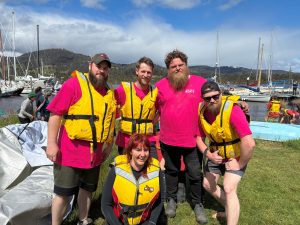
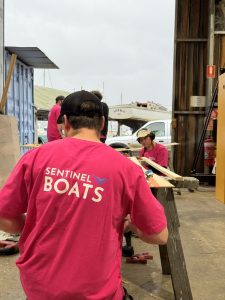
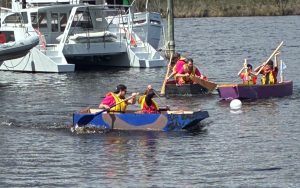
Crews from the Wooden Boat Centre, Sentinel Boats, RM Marine, Tasmanian Shipwrights and Cygnet Wooden Boats will be given just three hours to build a wooden boat, which will then be put through its paces on the water.
Cody Horgan said the annual tradition was a way of celebrating volunteers, students and apprentices and testing their boatbuilding skills against some of the best in the industry.
“There is nothing like time pressure, a bit of friendly competition and the risk of capsizing in the cold waters of the Huon River to test people’s boatbuilding skills,” Mr Horgan said.
“This year the Wooden Boat Centre will be fighting to defend its honour against new competition from the big end of town but we are confident we can hold our own.”
Sentinel Boats is the world-leader in building high performance boats using high-density polyethylene (HDPE). The Hobart-based company is currently in contract to replace with Royal New Zealand Navy’s fleet of sea boats.
Head of Production at Sentinel, Stirling Stumm, said the process of building boats from HDPE was strikingly similar to traditional timber vessels.
“At the heart of our boats are the same frames and stringers you will find in a wooden vessel and many of the hand tools we use are similar, so our crew feels pretty comfortable working in timber,” Mr Stumm said.
But where the Sentinel 780R is equipped with a powerful inboard waterjet and capable of speeds over 40 knots, the Sentinel crew will have to rely on manual power for their quick and dirty build.
Crews will be judged on a range of criteria including first boat completed, most complex design, neatest build, use of unpowered hand tools, most interesting form of propulsion and having the most team members in the boat.
They will be given the same set of materials, including sheets of three sheets of ply, four pine battens, 100 cable ties, a handful of screws and three tubes of sealant.
Mr Horgan said while the focus of the event was fun and friendly competition, it provided an opportunity for networking across the industry.
“This year we ran a highly successful program of swapping apprentices between the Wooden Boat Centre and Sentinel Boats,” he said.
“Strong collaboration and networks across the industry helps to strengthen Tasmania’s reputation for excellence in all aspects of boatbuilding – from wooden clinkers to advanced defence vessels.”